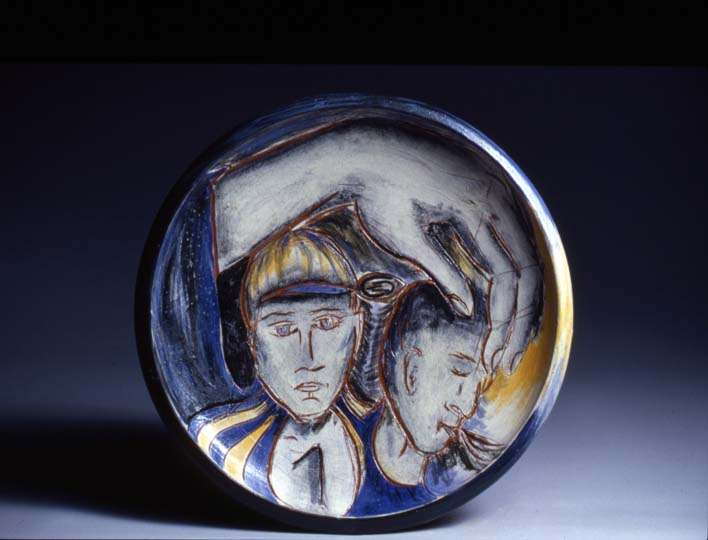
Exhibition: August 29 – September 27
Gallery Reception: September 16, 2013 2:00-5:00 p.m.
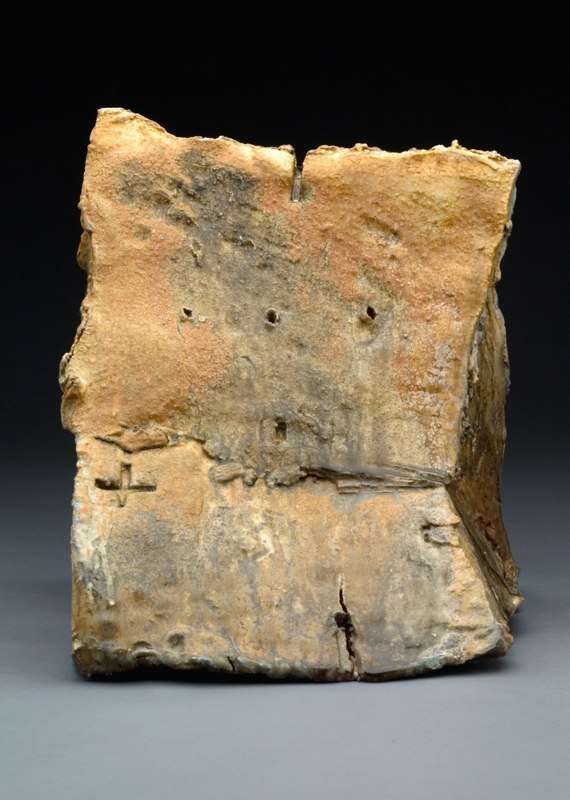
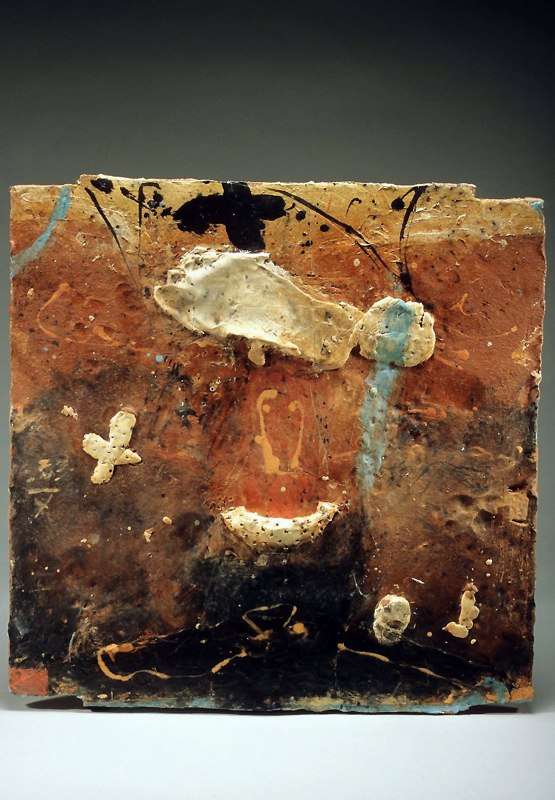
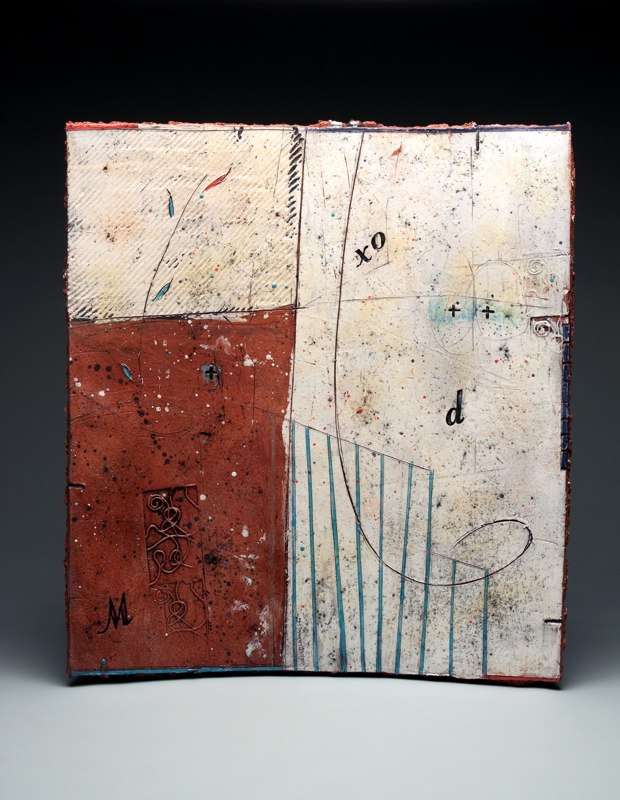
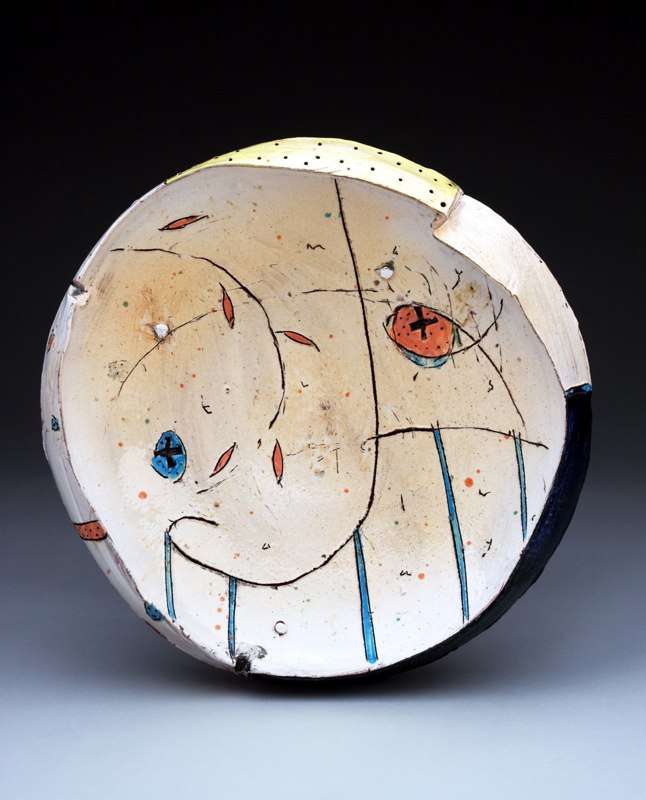
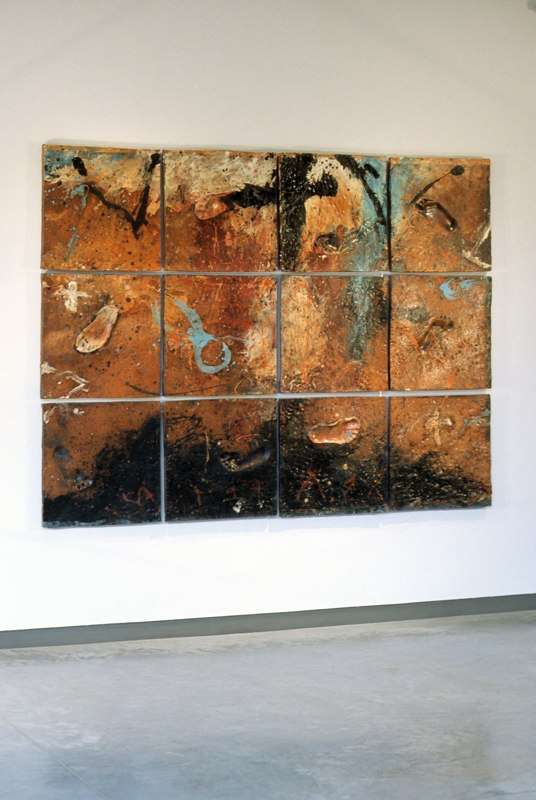
I want to reach a point where I can’t distinguish between a portrait, an eye, a bird and the figure “8”, a strong black line or the recorded touch of hand on clay. All this stuff is the product of the same thing – an internal dialogue – one’s desire and waking dreams going out to meet the clay. I want to get to the core of this matter and so I want to find simple, direct methods of working. Methods that allow compassion and humanity to be heard over the technical virtuosity of a clever hand and a trained eye. I want to find ways of working that respond to the only ability I have ever had, wishing the work well and silently encouraging it to “be good, be good.”
Who cares if it’s a pot or a sculpture, or a figure or abstract, if it’s big or small, if it’s flat or round or how it was fired. I’m just always trying to do the same thing – make things which say to me, “maybe there is more here than you ever imagined – can you just grow a bit taller to see it and listen a bit deeper to hear it?” It’s always just ahead, just around the next corner. It can be a part of the wonderful complexity of being a human and it can also be nothing – nothing, if that’s what we chose to make of it.
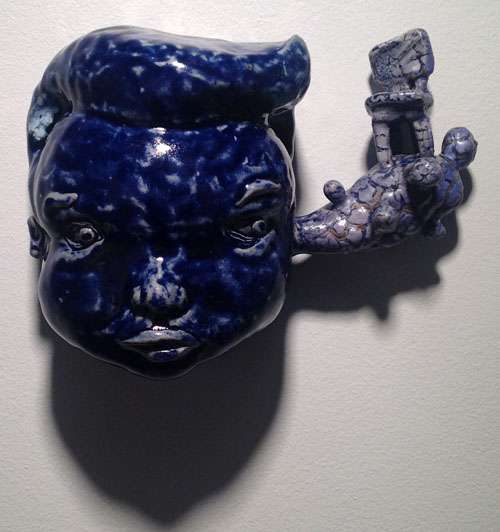
Click on photo to enlarge
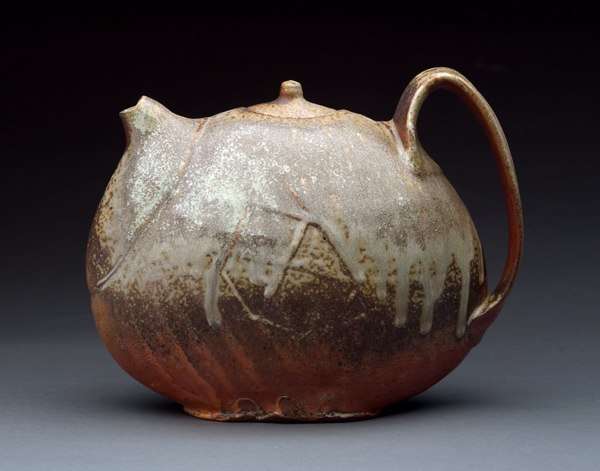
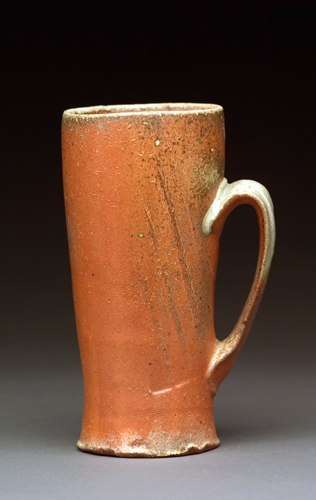
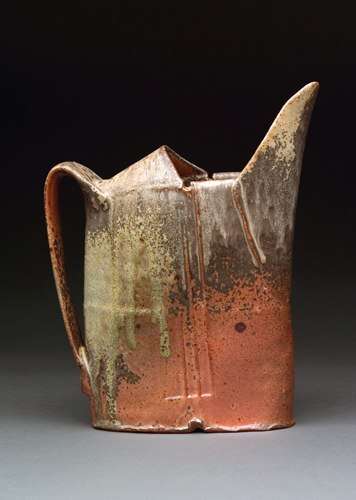
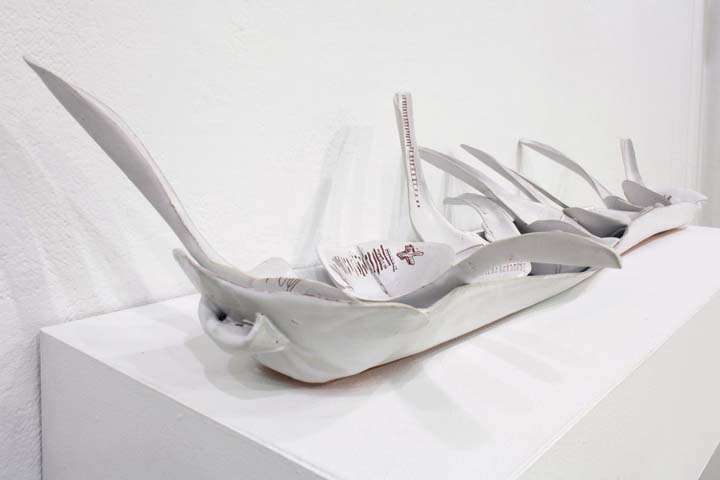
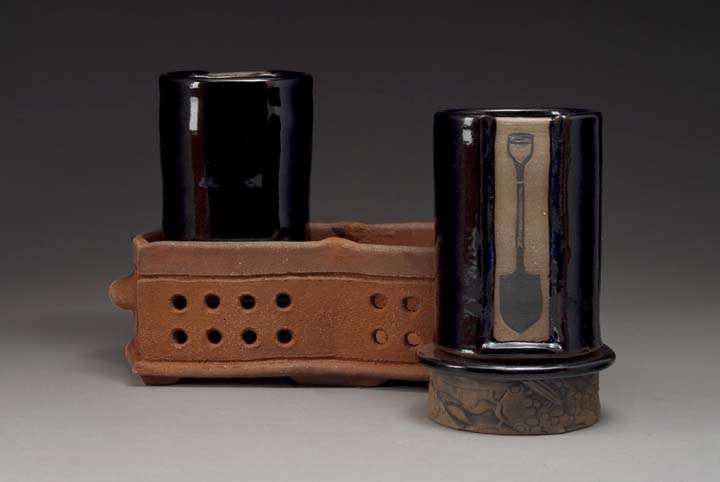
My current body of work explores domesticated vessels and patterns, allowing the viewer to question the familiar and the unknown. Creating abstracted forms of utilitarian objects (specifically those found within the kitchen) triggers the viewer’s memory and creates a physical and conceptual tension. My interests in objects obtained from the past focuses on human touch as well as untold stories. Working in clay allows my touch to be responsive to the material and in turn I am able to create my memory of an object that takes the viewer beyond this and into a realm that asks for placement amongst the living- past and present.
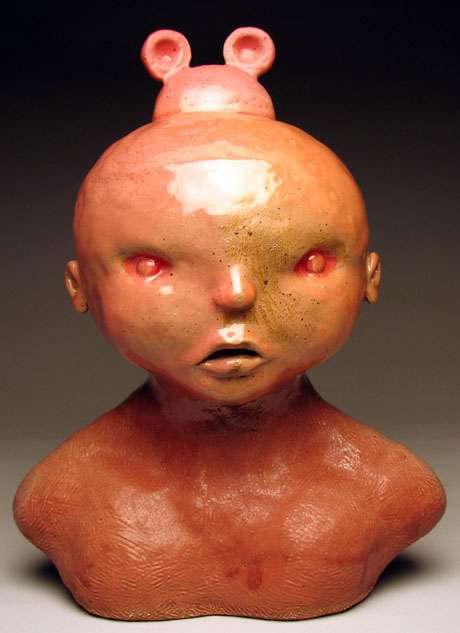
Click on photo to enlarge
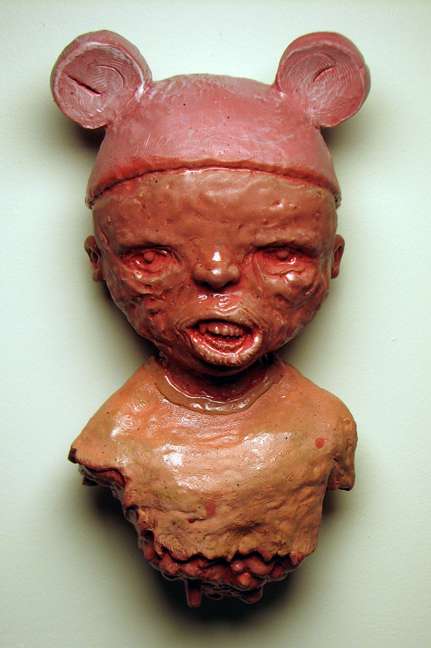
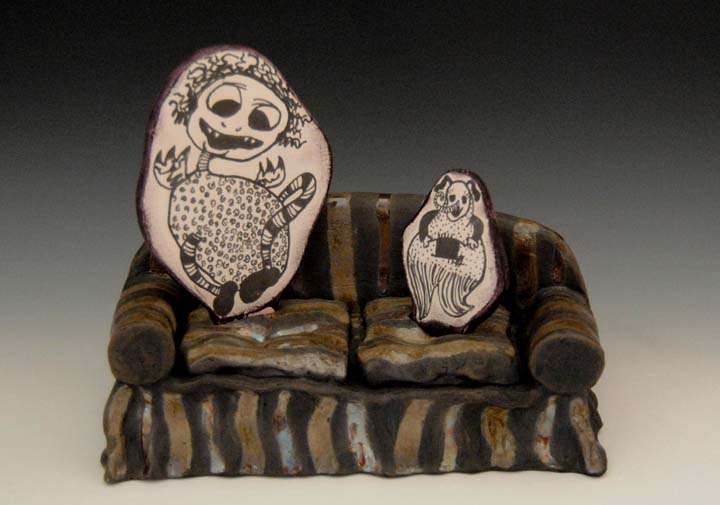
Benjie Heu is currently Professor of Ceramics at Southeast Missouri State University. Benjie Heu has an MFA from Ohio University (1998) and a BFA from the University of Montevallo (1994). In between degrees, he studied at the University of Massachusetts, Dartmouth (1995). The ceramics of Benjie Heu expresses a personal narrative with the most outlandish adventures accounted with an eye fixed on the bare essentials. Battles against time, against the obstacles that prevent the fulfillment of desire or the repossession of something cherished but lost are themes that inspire him. Revealing truth and humor in the face of horror and the seemingly absurd is his answer. Benjie maintains an active exhibition record of solo, group, juried and invitational exhibitions. His personal interests include drinking coffee, trying new foods, listening to music, laughing out loud, reading comic books, anything Tarantino, and playing with his two rascally children.
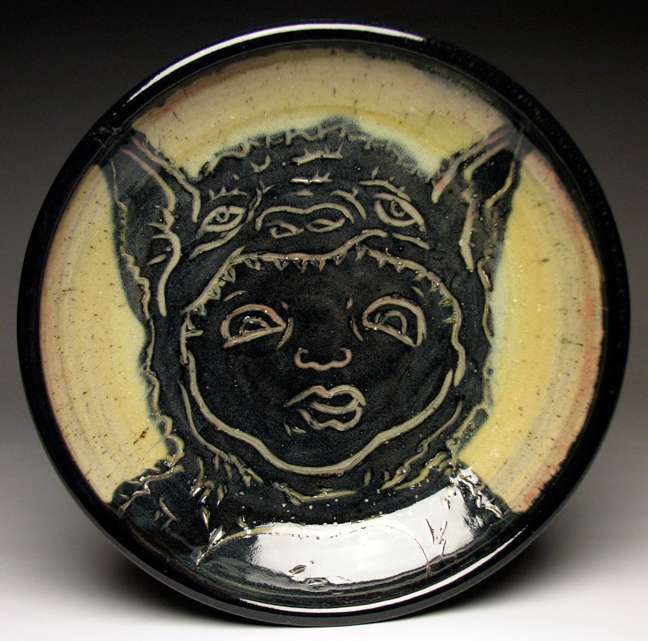
Click on photo to enlarge
My objective is to encourage appreciation for the interconnectivity I see in beings and life processes. I am very interested in ethical reasoning and perplexed by human activity, or inactivity, and how this correlates to the rest of life. When creating work, I allow my pieces to encompass my own emotions. I hope to spark feelings of compassion, sympathy, and joy and to trigger a feeling of intimacy. I have a hopeful attitude about the future and I want to share this with my audience.
As a ceramic artist, I am influenced by the natural world. I appreciate the material’s transformation from water, air and fire, as it reminds me of my own connection with the earth. My childhood memories of working with clay are still influential today as I maintain a playful attitude with my work, both physically and conceptually.
I have a responsibility as an artist to evaluate what impact I have on the community and environment. I try to be mindful not only of the end result, but also of the resources I use throughout the process of creating work. I am at early stages of this development and will continue to progress in hopes of working sustainably in my own art practice.
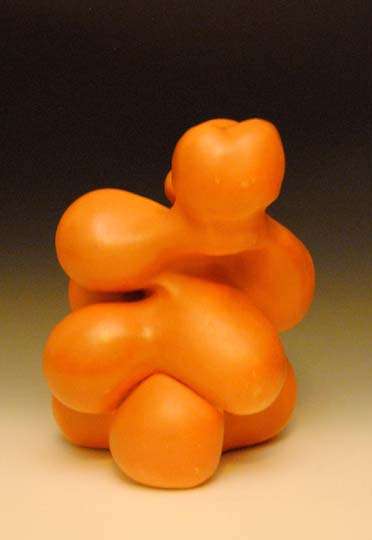
Click on photo to enlarge
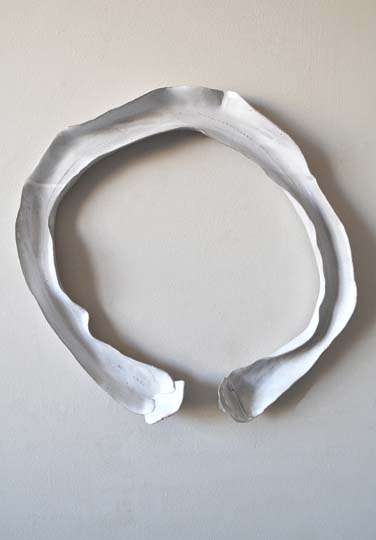
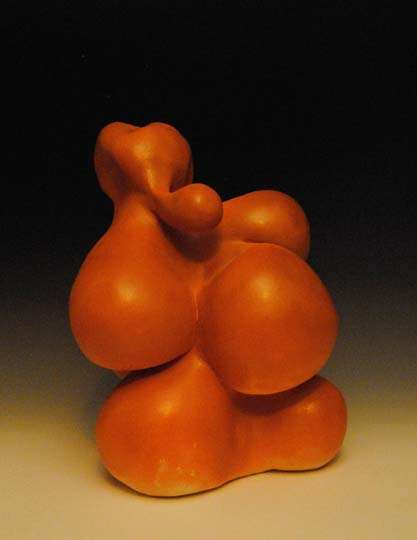
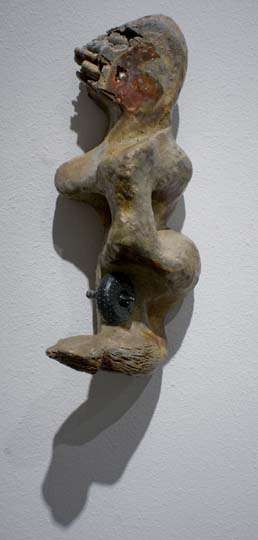
I view the human body as a social receptacle, a corporeal transportation device for ones concept of self. We carry with us our whole lives; the physical and metaphorical baggage of the body and mind signify our entire past, while the delicate and transient nature of the present continually transforms the interior and exterior spaces of the body. My figures reflect the reciprocity of inner and outer spaces as cages, voids and fissures reflect a relationship between the inside and outside. Our inner being or notion of self is intangible whereas the outer “skin” projects the physical transformation of an individual. Connected to the conscious, the body serves as a protective shell, but dually resides as a social receptacle displaying the conscious of its society; we can’t be selves unless there are others. Despite our acuity or apathy, time quietly passes as we traverse through life waiting for a turn to see what is on the “other side”.
Click on photo to enlarge
I am committed to clay as my primary art making material for many reasons. It is simultaneously one of the most fragile art media, yet also one of the most permanent and enduring. The simple, direct act of working with clay in one’s hands is the polar opposite of the complex, transformative nature of finishing and firing where you have to let go of your work. I am certain that these opposing but vital characteristics are what drives me to choose this material. You get your money’s worth when you work in clay.
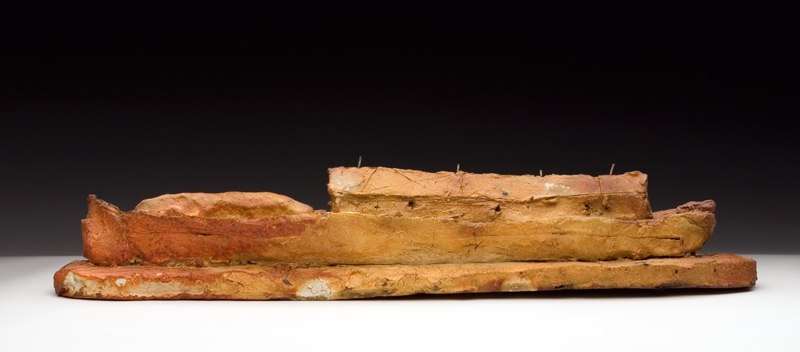
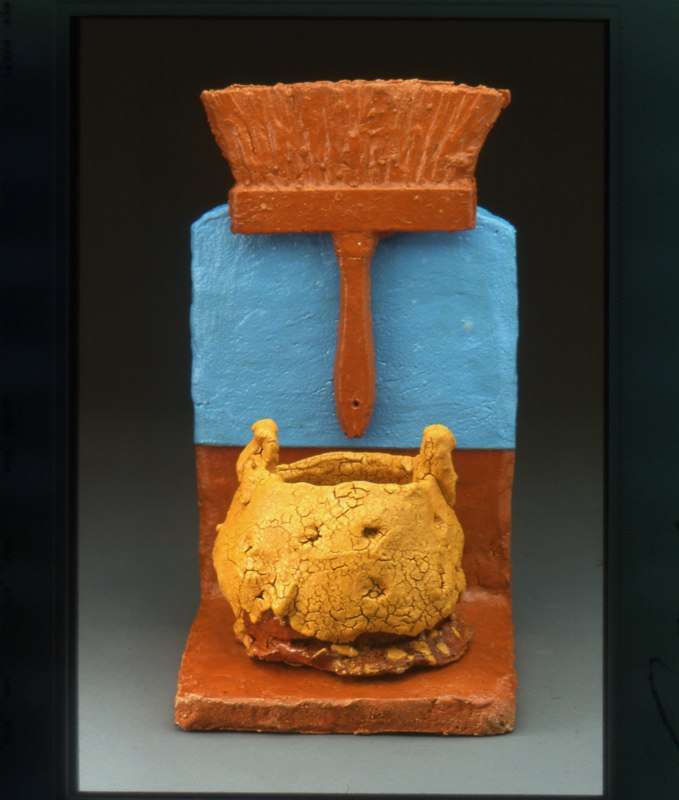
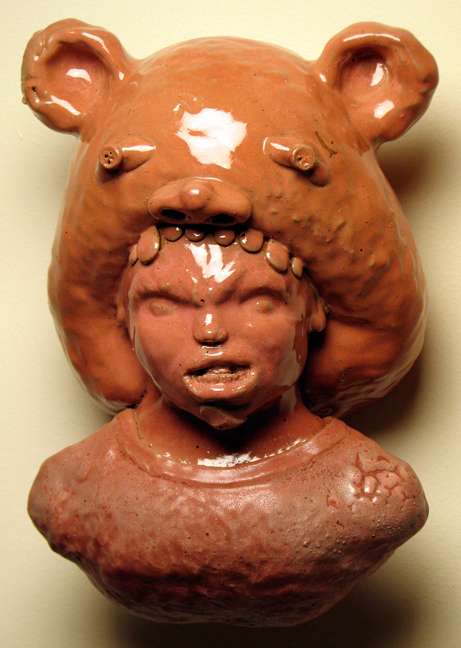
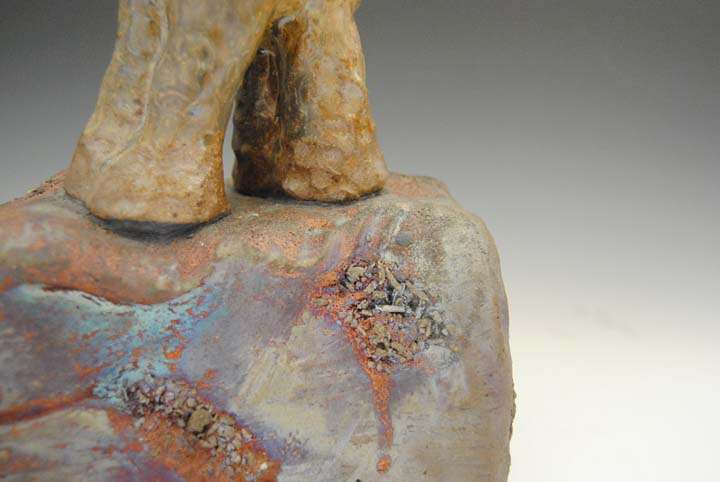
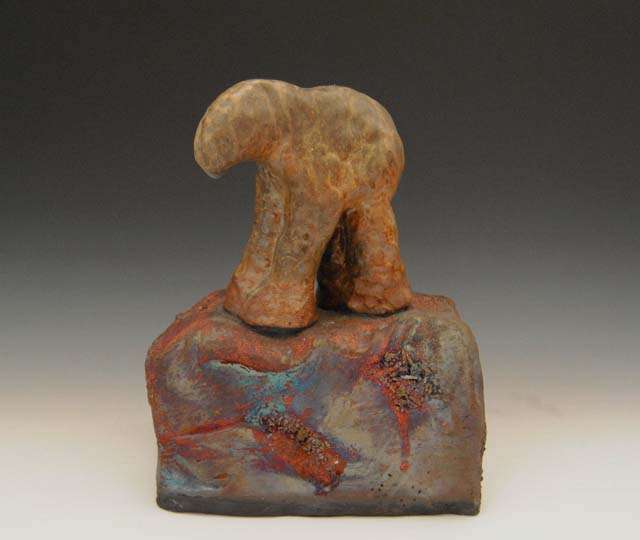
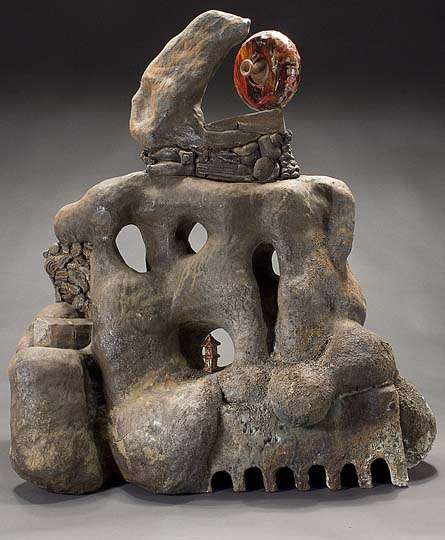
For the past several years my sculpture has incorporated imagery that makes reference to a diverse range of items. These are as far reaching as children’s toys to weapons, architectural elements to geology, exalted objects to everyday mundane objects. Recent trips to Spain, Taiwan- the Republic of China and the People’s Republic of China have made an impact in that I have procured various images from those places including such things as scholar’s rocks, architecture, cultural and flora and fauna images. Although made primarily from hand-built clay, wheel thrown and simple press molded parts are used at times. The idea of mixed ceramic media has become interesting to me, so a variety of finishes and surfaces are often combined including low fire, high fire, salt, wood and luster glazes. Most pieces are assembled after firing.
Click on photo to enlarge
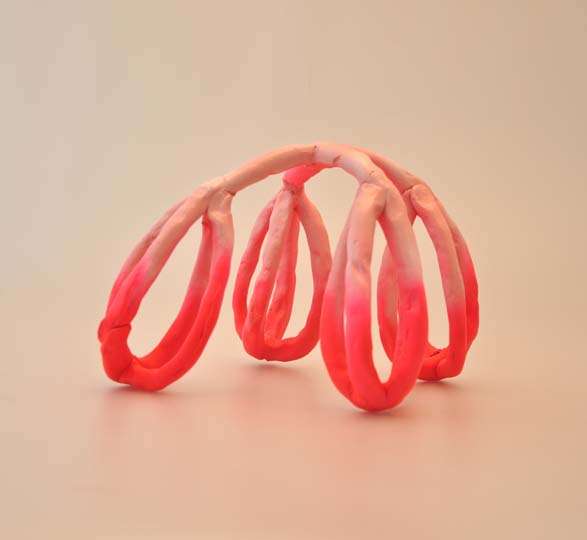
My interests lie in the interrelatedness of things, across cultures, languages, and objects. These objects share similarities with forms related to biological processes, anatomy, succulent plants, cloud formations, and molecular orbital diagrams, but directly represent none of them. Acknowledging contradictions, tensions, transfers of energy, moments of stasis and entropy, my ambition is to create a cohesive piece, giving the viewer a felt sense of form.
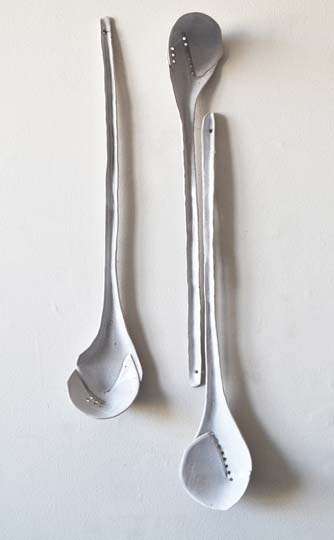
My way of working is primarily an intuitive process; one of drawing with clay, and re-contextualizing and re-configuring the remnants of slip casting. These components once discarded, are re-purposed into sculptural objects. I am drawn to the potential that these pieces have to be combined to create new and interesting forms.
Click on photo to enlarge
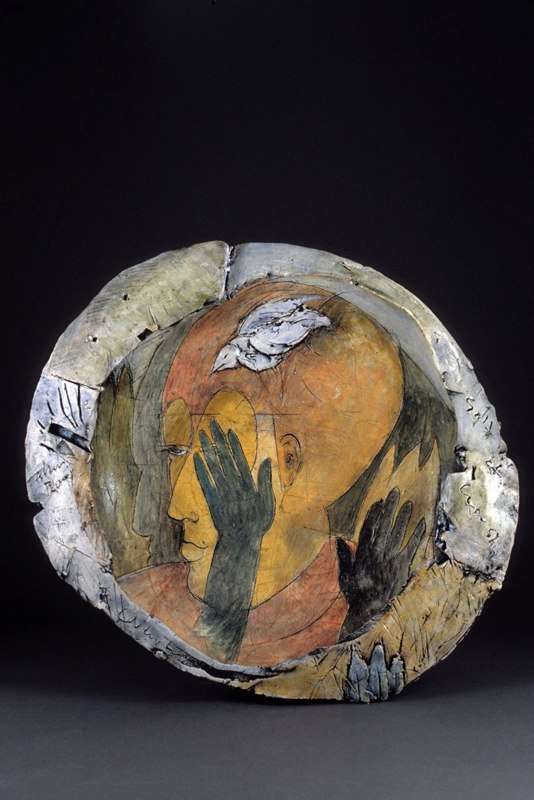
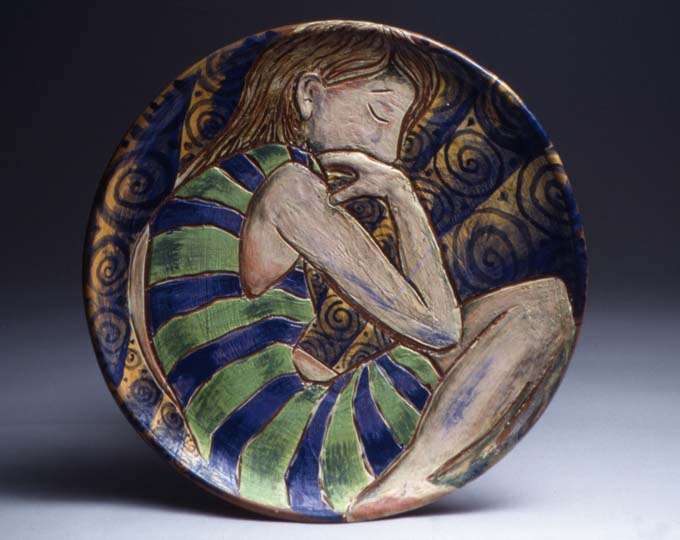
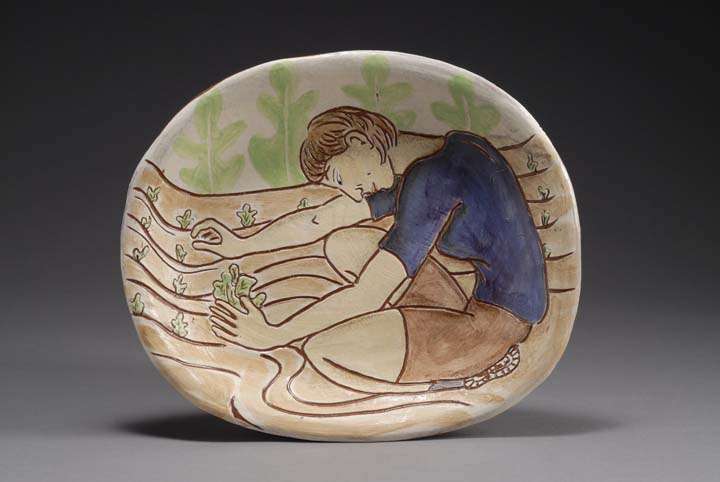
My work uses the figure, both literal and suggested; nature; and architecture as visual reference points. I view my functional ceramics as design exercises in producing forms which then provide a surface for decoration. Currently, I am using line and decorative backgrounds to influence the mood of the figure and looking at the nuances of vision, watchfulness, and exploring relational complexities between internal and external realities, the quiet, unspoken psychological intricacies not explained by science.
Laura currently teaches Modern Art History and Ceramics at Parkland College in Champaign, IL. Her work has been exhibited nationally and appears in Surface Design for Ceramics by Maureen Mills as well as ten of Lark’s 500 Series books.
Click on photo to enlarge
Nate Johnson
Marcus Hill
Travis Wallace
Andrew Harmon
Anthony Hill
Devan Moss
Derrick Wiley
Terrance Chapman
Marvin Moss
Antonio Burks
Bobby Ewing
Raymond Warner
Andre Thornton (Manager)
In the 1973-74 basketball season, Sills scored 529 points. Under Coach Charlie Spoonhour, four players on the same team put up over 500 points that season, a record that still held when Sills was inducted into the Hall of Fame. The Hounds finished 32-8 that season, taking third place at the National Tournament. Sills returned for his sophomore year, lead the team with 535 points, averaging 17.8 per game, and was named to the 1975 All-Region XVI team. He spent one season at Georgia State University; ruled ineligible for the next season, he returned to Moberly to marry his long-time girlfriend.
Wise was named Greyhound Defensive Player of the Year his freshman year, and closed his MACC career with a 12.0 points per game average. He received All-Region XVI accolades during both of his seasons at MACC and, in 2005, he was named to the NJCAA All-Tournament Team and received Third Team All-American accolades. Wise transferred to the University of Southern Indiana, where he served as team captain and led USI to two regular-season conference titles and two conference tournament championships.
Smith received a number of honors, including First Team All-Region XVI in 2004, Greyhound Most Valuable Player in 2004, and All-American Honorable Mention in 2004. He was named NJCAA Player-of-the-Year in 2005; at the time of his induction, he was the only Greyhound in history to receive this honor. During that same season, Smith was also named to the NJCAA All-Tournament Team and earned First Team All-American honors. He finished his MACC career with 1086 points and 425 assists. After MACC, Smith transferred to Texas A&M, then the University of Illinois-Springfield for his senior year. After college, Smith played professionally for eight years with the Continental Basketball Association (CBA) for the Lawton-Fort Sill Cavalry in Oklahoma, where he was a member of three championship teams, and the Windsor Express of the National Basketball League of Canada (NBL), winning a championship in 2012.
Shuck rewrote the record books at MACC, taking the All-Time Leading Scorer record with 1,408 points. She was named All-American and All-Region XVI Player in both of her MACC seasons. Shuck took her skills to the University of Texas-San Antonio, where she was named Southland Conference Newcomer of the Year in 2003, an All-Team Letter Winner in 2003 and 2004, and Second Team All-Conference in 2004. While at UTSA, she scored 589 career points and pulled down 290 career rebounds.
McKinney’s sophomore year at MACC featured a 23.7 scoring average (second-best in MACC history at the time of her induction), a 55% field-goal average, and a 71% free-throw average. She was named to the 1994095 All-Region XVI Women’s Team and the NJCAA All-American Second Team. She continued to Kansas State University, where she averaged three rebounds and 4.5 points per game.
Day made the Region XVI men’s team both of his years at MACC, and honorable mention to the NJCAA All-American Team his sophomore year, when the team earned the Region XVI championship title and finished third in the National Championship Tournament. Day’s collegiate career continued at the University of Nebraska, where as a junior he earned honorable mention All-Big Eight Conference honors, and he was named the Cornhusker team’s MVP. Bernard led Nebraska to its first NCAA Men’s National Championship Tournament in 1986. His professional basketball career lasted eight years while he played in Ireland, Holland, France, and Israel.
Bledsoe came to MACC from Beaumont HS in St. Louis. In his first year at MACC, he averaged 11.7 points and 6.5 rebounds per game, helping his team capture the Region XVI title and finish third at the National Championship Tournament. His sophomore year, he improved that average to 13.4 points and 7.3 rebounds per game before he suffered an injury. He was still named honorable mention to the NJCAA All-American Team. Bledsoe continued his education and basketball career at Kansas State University, the followed a professional basketball career to Sweden, Holland, Portugal, and Peru.
Kujawa came to Moberly in 1978 when he joined the staff at KWIX/KRES/KIRK and became the voice of the Greyhounds. In his 30-year career behind the microphone for the Greyhounds, he broadcast over 1500 games.
Pepper played at MACC 1996-1998 and was a leader on the basketball team being awarded honors such as All-American and Region 16’s Most Valuable Player. Pepper transferred to Arkansas State University, and played basketball there for two more years. During the 1999 basketball season, C.J. and his teammates led ASU to the NCCA tournament for the first time in history. As a result of his talent and hard work, he played professional basketball as a member of the Washington Generals, New York Nationals, and the Harlem Globetrotters. He later played in the American Basketball Association for the American Bulldogs, a Kentucky Semi-Professional team for the 2006-2007 season.
Ketchum is the first MACC staff member to be inducted into the Greyhound Hall of Fame. She served as Greyhound Athletics Advisor, 1996-2005. She founded the student athletics success program as the advisor, tutor, and mentor to MACC student-athletes. She diligently worked to motivate all athletes to be successful on and off the court.
Cochran played from 1974 to 1976, and later served as an assistant coach for both the men and women Hounds for several years. He has served on the College’s Board of Trustees since 2010.
Milling played at MACC from 1983 to 1985, scoring a total of 1,049 points, before going on to play for University of North Carolina-Charlotte. He was drafted in the fifth round by the Indiana Pacers.
As a freshman, Hughes set the program’s fifth-best rebounding mark at 350 and is tied for ninth in points at 626. She continued her basketball career at the University of Arkansas-Little Rock.
Seifert coached the Greyhound men from 1995-2001, and revived the winning tradition of Greyhound basketball. During his time at MACC, Kenny was not only a basketball coach, but he taught business classes to hundreds of students. He was a great supporter of all faculty and staff and volunteered to help on any project happening on campus. Seifert left MACC to become the Athletic Director for the Moberly School District where he earned the MIAAA NE District AD of the Year Award twice, then on to Missouri State High School Activities Association in 2016, where he oversaw the officiating program and the tennis program. Seifert retired in June of 2023.
Steffes was a staple of Greyhound Athletics for over 35 years as a fan, supporter, booster, “Music Man”, administrator, and bus driver Greyhound Women’s Team to their national tournament appearance in 2018. As the Chief Financial Officer, Gary was responsible for ensuring the teams had proper financial support and funding to survive and thrive. As a fan, he missed very few games and traveled to places far and wide with the Greyhounds, wearing the hat of an administrator if a problem arose. His solid leadership skills offered constant support to coaches and other administrative staff through the years. He understood and promoted the importance of Greyhound basketball to the community. Steffes also spearheaded the comeback of the Greyhound mascot and came up with the clever name of “MaJiC” as a nod to both the Magic City of Moberly and the college’s name of Moberly Junior College.
Hughes played for the Greyhounds 2010-2012 and was an All-Region selection. He averaged 10 points and eight rebounds per game in the 2011-2012 season. He transferred to the University of Central Missouri, appearing in 23 games his junior year. He scored a season-high 16 points in the season-opening win over Northern State. He then competed as part of the 2013-14 NCAA Division II Championship team.
Coach Dick Halterman
Coach John Cochran
Ball Boy – Troy Halterman
Eleanor Carr
Rochelle McKenzie
Brenna Kelly
Carmela McMullen
Tammy Harryman
Janet Thompson
Kim Cooley
Lisa Brown
Georgia Hinson
Kathy Schulz
Denise Derrieux
Margrett Bassett
Jackie Glosson
Marion Fitzsimmons
Manager – Debbie Brown
Manager – John Peveler
With a season-ending record of 34-6, the 1980-81 Greyhound Women’s Team, led by third-year head coach Dick Halterman was the first team in MACC history to win a sub-regional title; the first team to win a Region 16 championship; the first team to win an interregional championship; and the first to compete at the national level in the National Junior College Athletic Association (NJCAA) basketball tournament. Advancing to the semifinal game, the Greyhounds beat undefeated Jackson State before eventually losing the national championship game to Louisburg, North Carolina, with a final score of 65-63.
Coach Dick Halterman
Coach John Cochran
Sandy Moore
Pat Seger Zeitlow
Lisa Linathcum Holt
Patty Rapp Thorne
Renne Skaggs Brown
Vickie Crigler
Elenaor Carr
Rochelle McKenzie
Sheri Sills Schneider
Sara Figg Gillilan
Manager Roxie Robinson
Manager Debbie Brown
Coach Joyce Campbell
Assistant Coach Steve Hunter
Mary Smiley Wohlford
Linda Connor Seidt
Robin Fitzsimmons Trammell
Janet Jackson
Debbie Stith Head
Kristie Richards Musick
Donna Farris David
Brenda Rucker
Neal Head, trainer
Cara Sue Bowden Cockerham, manager